Collaborating with teachers in China had been a dream of mine for years. It is also a dream that has become increasingly harder to realize because opportunities for U.S. educators in China have narrowed dramatically over the years. Without connections, you simply cannot walk up to a school in China and start asking questions.
That is exactly why AESA Global matters. For nearly twenty years, the organization has been quietly building the relationships and partnerships that have opened those doors — and this summer, they opened for me. After a surprise phone call from AESA Executive Director, Joan Wade, who happened to recall that I had a Chinese Visa, she asked me to fill in for someone who unexpectedly could not make the trip in July- about a month away. I was already saying yes, and when I found out I would get to work with AESA Chief Operations Officer, Sheila King, my response became YES! I did a quick google search to find the city we would be in, Jinan, Shandong Province and started packing.
Two Decades of Trust, Paid Forward
Our hosts, Chief Global Officer, Jason Hiruo and Director of Projects, Meimei Zou, took incredible care of us while working constantly to further expand opportunities for ESAs in China and several other countries in Europe and Asia. The connections they have built reflect almost twenty years of foundational relationship work, and the trust they have earned within China’s educational community allows AESA Global to offer experiences few people are allowed to have today. For an educator, like me, that trust translates into a low-risk way to experience China — and so many other countries —that goes far deeper than most people will ever get. For ESAs it means offering opportunities for the districts we serve that are both profitable and deeply meaningful for students and educators. That deep trust directly translates into benefits for ESAs and districts.
Every detail of travel was arranged to perfection. Visas, plane tickets, trains, cars with drivers, lodging, meals — all of it was covered and coordinated. We simply showed up ready to teach. Clearly this was not their first rodeo.
Five Days, Five Lessons, Three Audiences
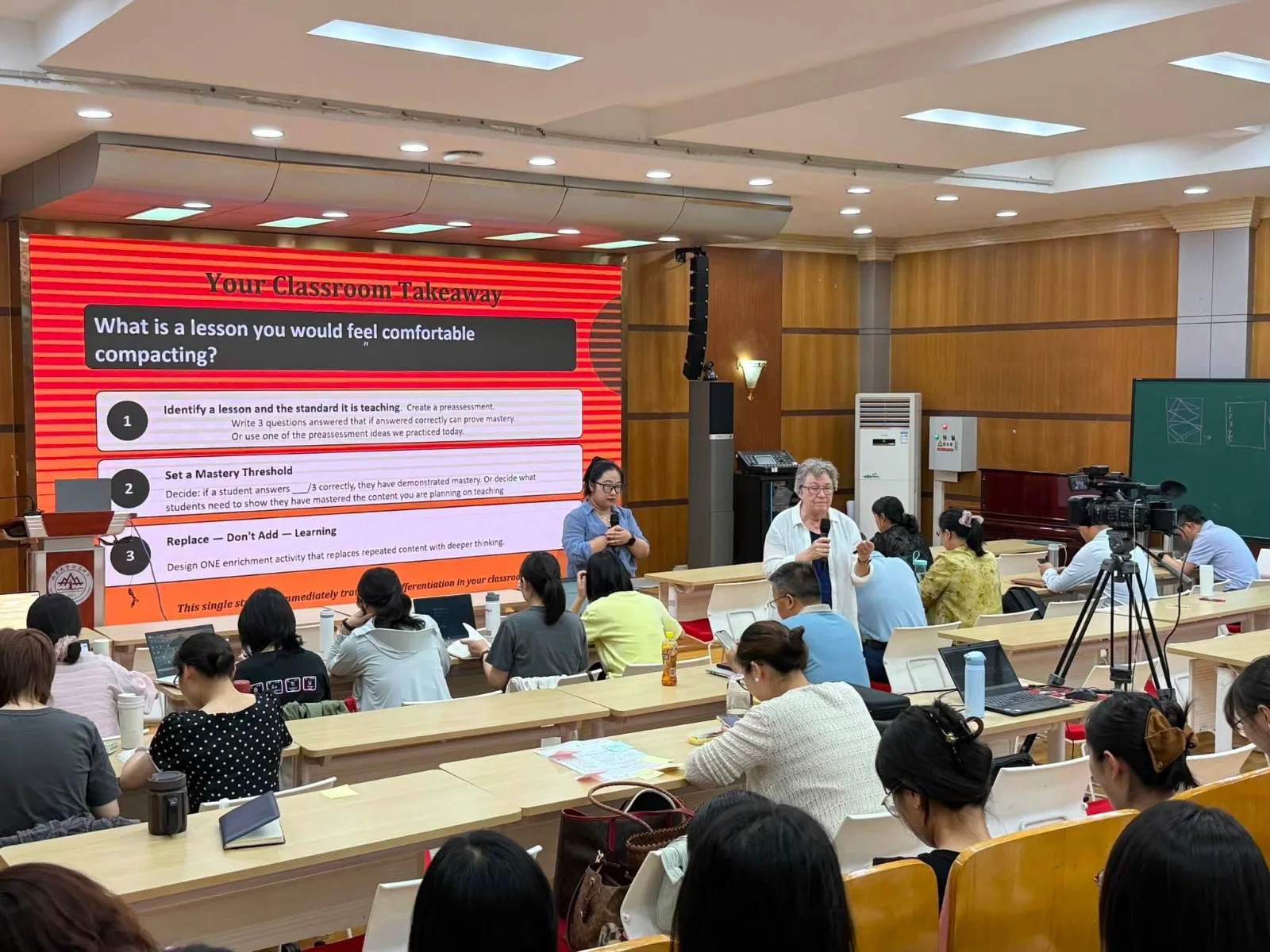
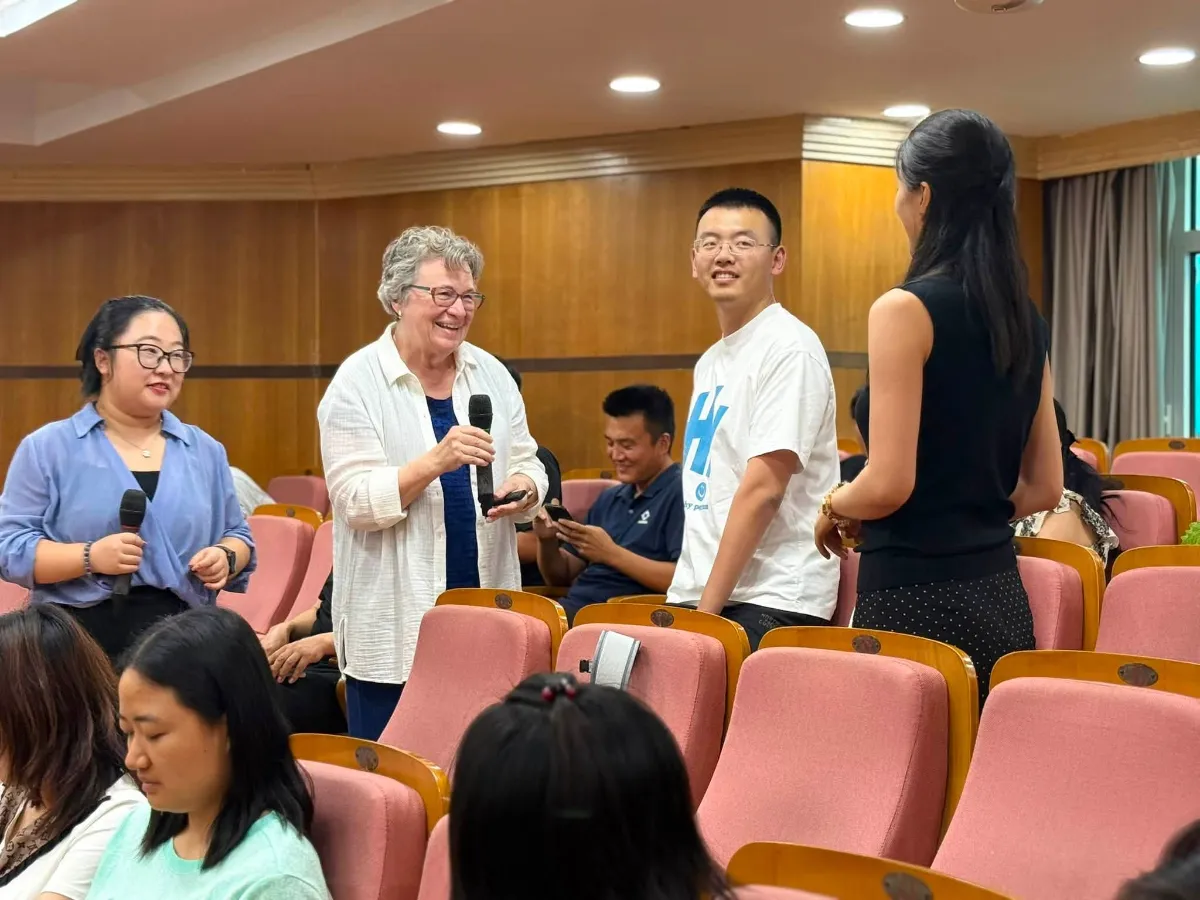
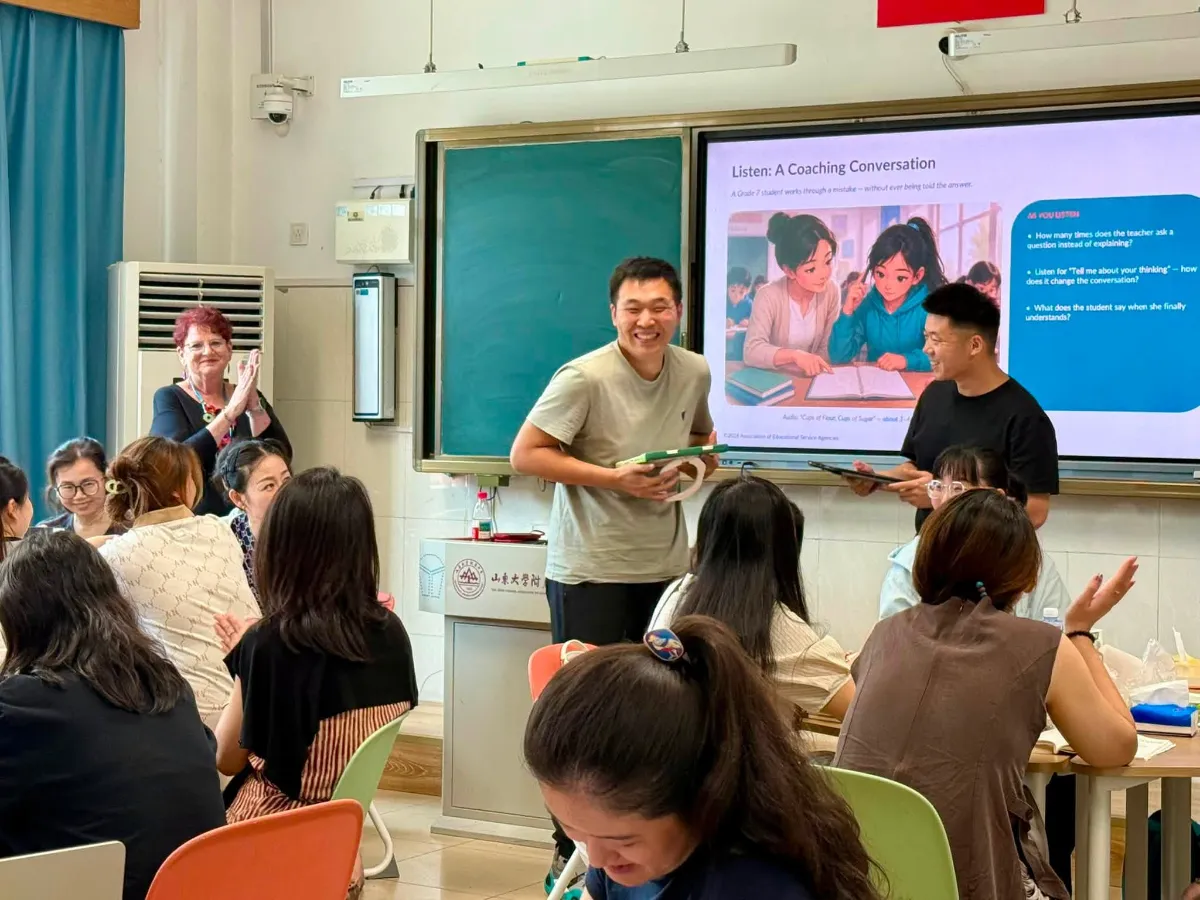
The professional development schedule was full but thoughtfully paced. We were given an outline of topics on Gifted and Talented Education with the flexibility to alter the outline. Over five days we taught five lessons, and each lesson was presented three times a day to three different audiences: elementary, middle school, and high school teachers. Each session ran 90 minutes, but because everything we said was translated from English into Chinese, we prepared only 60 minutes of material, with 30-minute breaks between sessions to catch our breath. Sessions varied from 35-50 participants.
I arrived carrying one belief: that I would learn far more than I would teach. I was right.
What I Found in the Classroom
Like many teachers, most I worked with were curious, highly professional, and deeply invested in their craft. As they worked to link standards to inquiry learning, or other strategies (e.g., curriculum compacting). They generated creative essential questions with follow-up sample lessons (e.g., Why is satire regarded as a mirror that reflects truth? And How are African rhythms used today and how will they be useful in the future?), or the more immediate issue: How can we create and apply mathematical models to solve the school parking lot problems?
Like teachers in the US, most appreciated real-world examples and materials that were ready to use, strategies they can apply at once. Not surprisingly, most teachers were motivated most by experiential learning. When I announced, we were going to role-play, there was not a single eye roll — which, let’s face it, was extremely polite.
And yes, artificial intelligence has arrived in Chinese classrooms. Did I use AI in my teaching? Yes. Did teachers improve their lessons with it? Yes. Are they actively working to incorporate AI into student lessons and homework? Also, yes.
A System in Motion
Teaching in China has changed in the last twenty years. The stories I had heard from educators who taught there fifteen or twenty years ago simply no longer apply. The country studied instructional approaches from the U.S. and Europe and melded them with Chinese methods. These methods continue to evolve just as they are in the US.
However, one constant is still the Gaokao, China’s high-stakes national college entrance examination. Pronounced “gow-kow,” it is a multi-day test taken by 12.6 million students
every June to decide university eligibility. It is widely considered the most difficult college entrance exam in the world. The government is working to reform it, but change is difficult, and the Gaokao remains a dominant force in students’ lives.
Yet the system also takes care of its youngest learners in ways that surprised me. Kindergarten students take long naps at school. Young students are fed robust meals throughout the day, including a late afternoon meal. And because children remain engaged in relaxed activities such as sports or art until 5:30 or 6:00 in the evening, parents don’t need to arrange after-school care.
Why I’d Do It Again in a Heartbeat
Teaching with AESA Global was fun. It was a chance to explore China at a depth no tourist can access, and to meet fellow educators who care deeply about students and about education itself. After the week with educators, I took advantage of being in China to extend my trip another week for tourist activities and time with family.
I returned home yesterday. I am jet-lagged, tired, and deeply satisfied. Would I do it again? In a heartbeat.
Is AESA Global for you and your ESA?
If you have ever wanted to see your profession through new eyes, working with AESA Global may be for you and your ESA:
· Helps you support the districts you serve in innovative ways that cover your ESAs costs (and might even make a profit).
· Giving you access no tourist gets — genuine, working relationships inside schools built on nearly 20 years of deepening trust with AESA Global.
· Logistics handled end to end — visas, flights, trains, drivers, lodging, and meals are all arranged for you seamlessly.
· A manageable teaching load — your prepared material is translated live, with generous breaks built into the day.
· Professional renewal — engaged, appreciative colleagues and the chance to rediscover and enhance the spark that brought you to education.
· Two-way learning — you will come home with more innovative ideas and perspectives than you brought.
As the international division of the Association of Educational Service Agencies (AESA), AESA Global is committed to expanding global partnerships that enrich students, educators, and communities. They work tirelessly alongside educational service agencies (ESAs), international schools, ministries of education, embassies, consulates, and nonprofit organizations to create meaningful, long-lasting international connections. For more information contact AESA Global: https://www.aesa.us/aesa-global and take advantage of the opportunities as global education is now essential to your students.