As a former French teacher, I have always found it very rewarding to help students make connections and think critically about their context as they compare it with a new understanding while traveling. During trips to France with my students, they would verbalize how different their own culture was from the new one they were experiencing, and I knew that their understanding was growing. This open-mindedness will carry across their working and personal lives and allow them to navigate challenges with flexibility and humility.
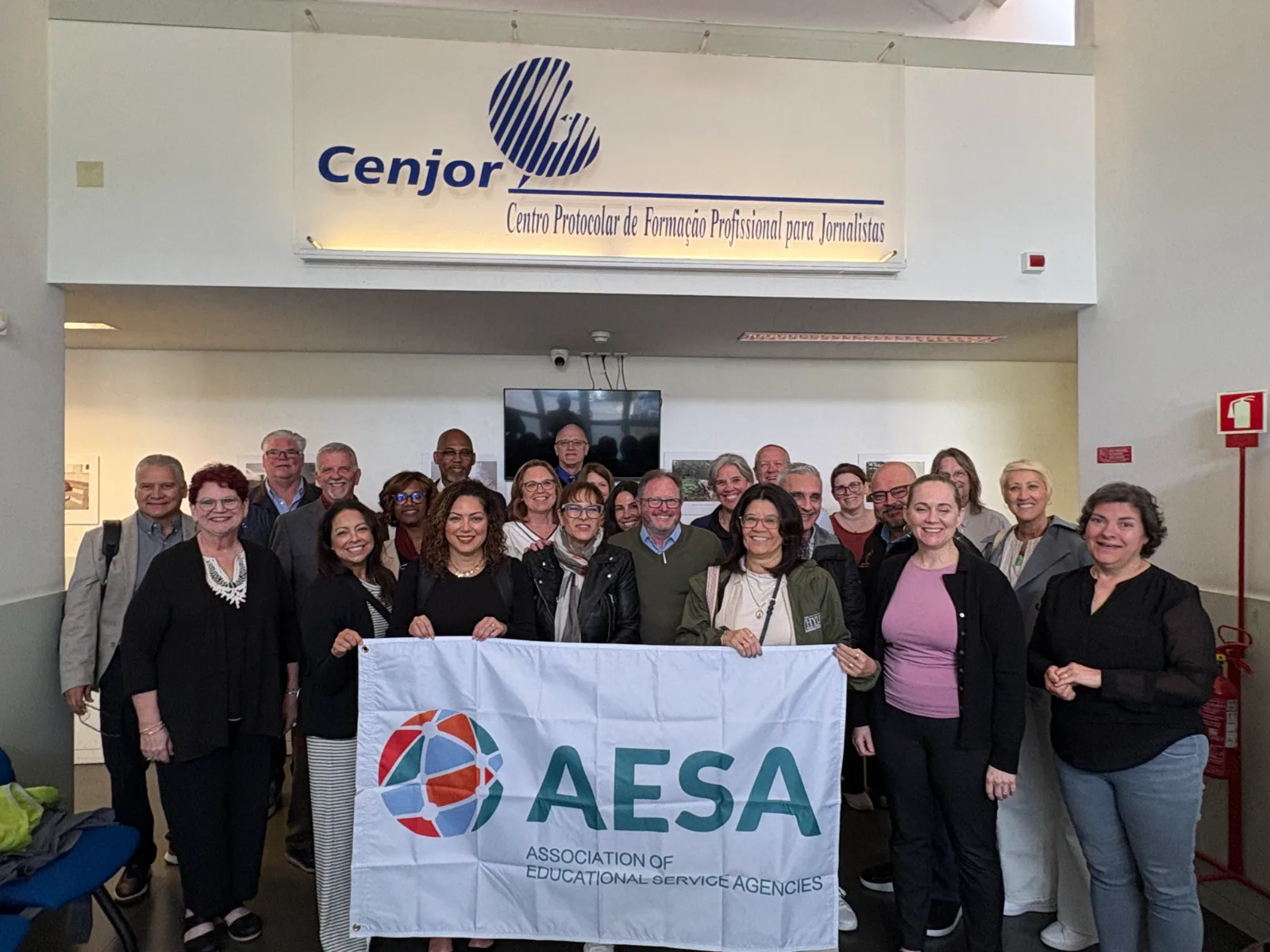
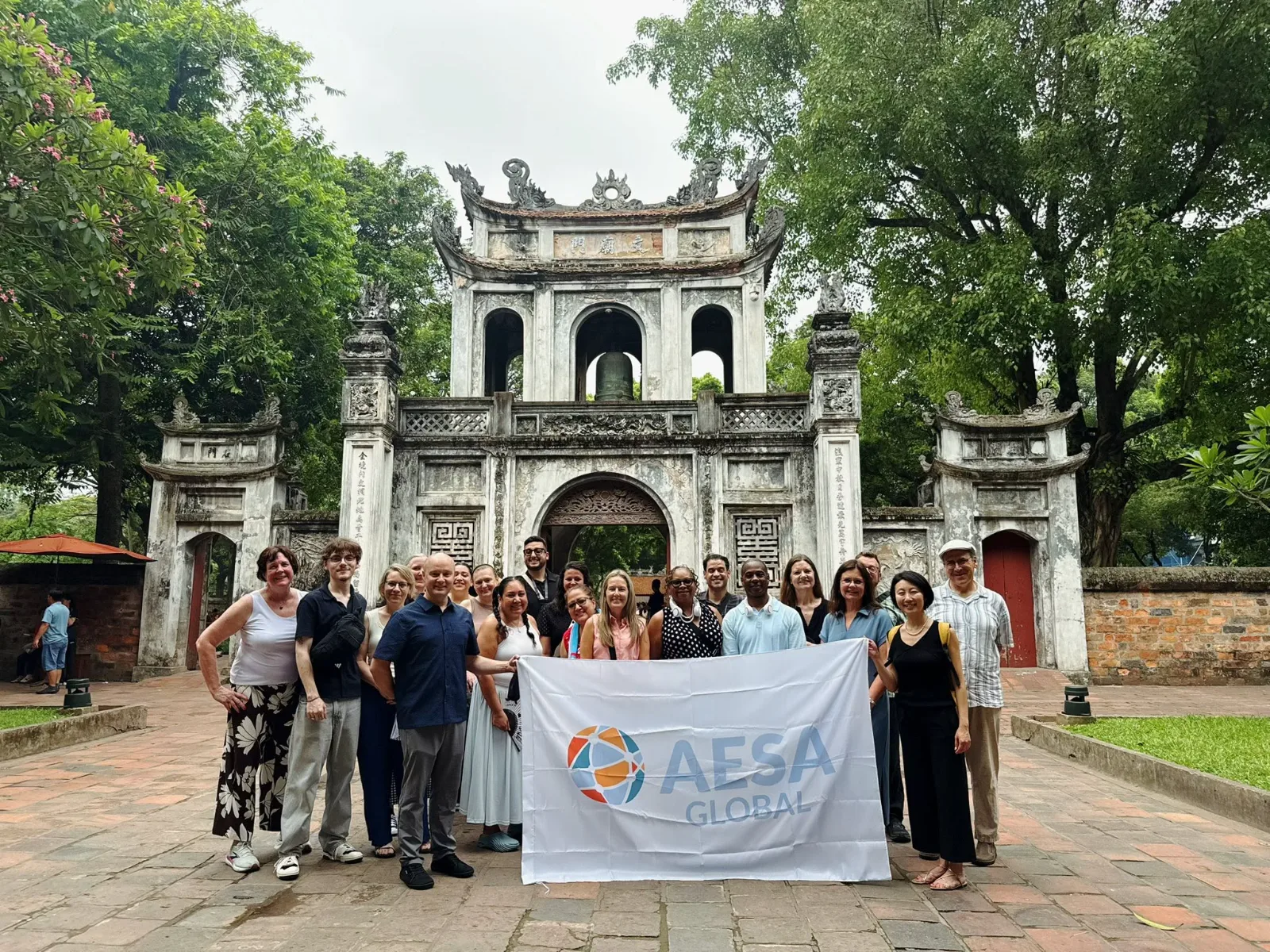
With that in mind, the opportunity to participate in an Educator Field Study through AESA seemed like a great chance to reflect on how I might be able to do the same for educators in my new context working in an Educational Service Agency (ESA). Along with my colleague Terri, we began the trip to Vienna, Austria, ready with our business cards and gifts to hand out to the new educators we will meet.
Upon arriving in Vienna, we met up with our group in the airport and learned that we would be traveling with approximately 20 educators. This included Hungarian points of contact Mercédesz and Tamas. Our group leader, Jason Hiruo, had us all set up to communicate important information to everyone via WhatsApp. This was a recommendation he had made prior to the trips during informational sessions he offered, where he discussed how to prepare for the trip and what to expect. The day began right away, with a trip to center city to enjoy lunch and the sites. Once we arrived at the hotel, we had time to rest, shower, and get ready before we headed back out to an authentic Viennese group dinner at a local restaurant. During that time, we got to know our trip companions a little better, and learned that many of them were teachers.
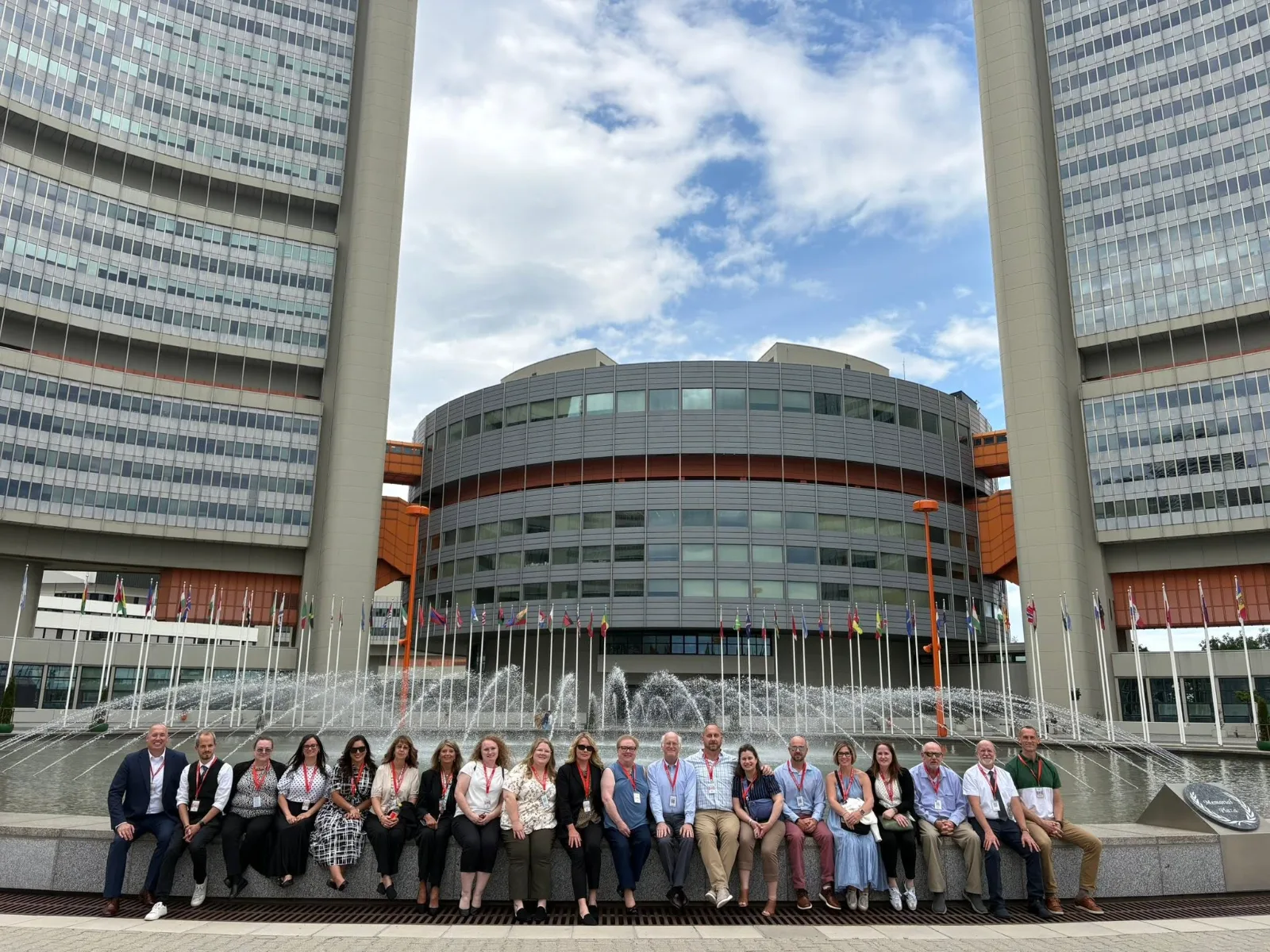
During our time in Vienna, the field study portion focused on getting to know more about Hungary and Austria and the shared history, as well as understanding the importance of the United Nations in Vienna and the role it plays. We received an exclusive tour of the UN and learned about the Sustainable Development Goals (SDGs), and visited the Hungarian Embassy and heard from local professors and the ambassador to Hungary (at the time). It was interesting to consider the challenges that Hungary faces as a nation before entering its schools to better understand the school systems.
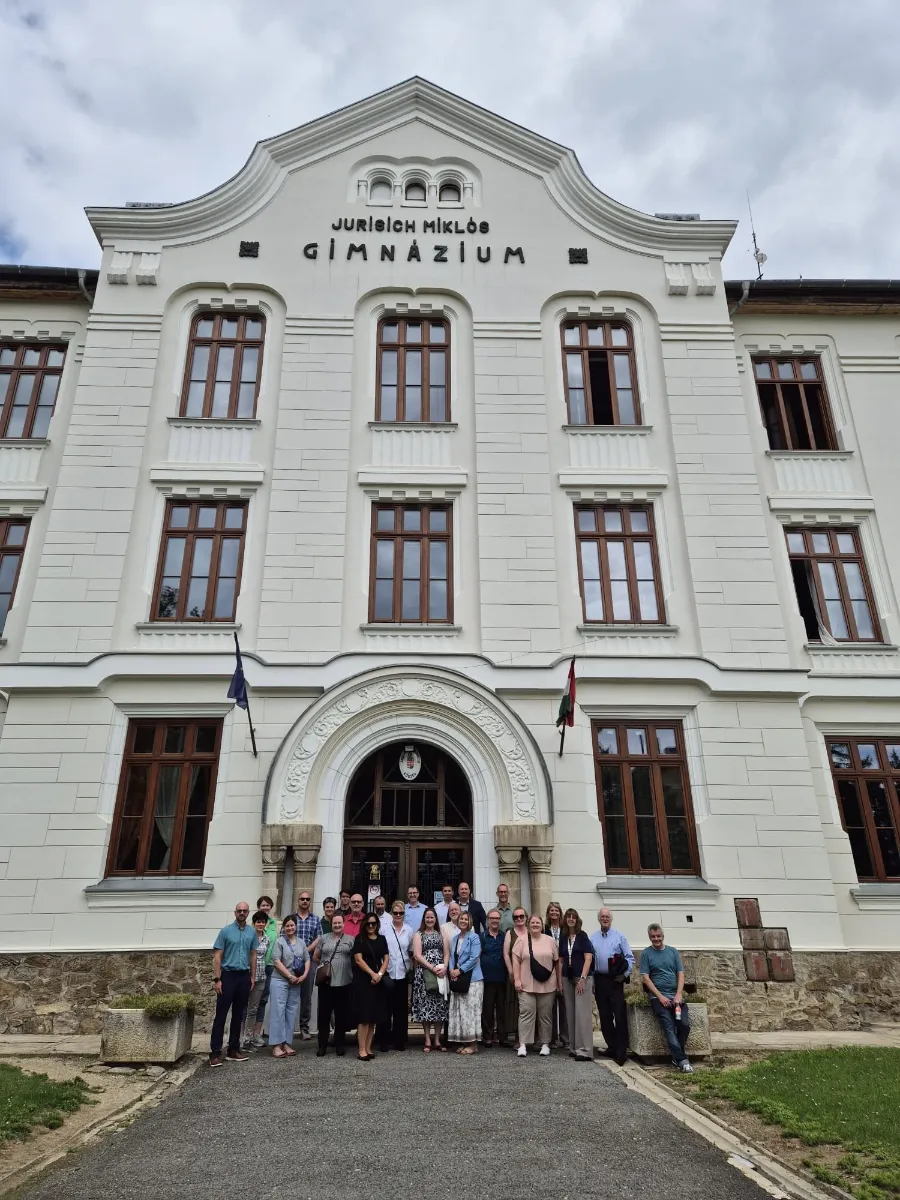
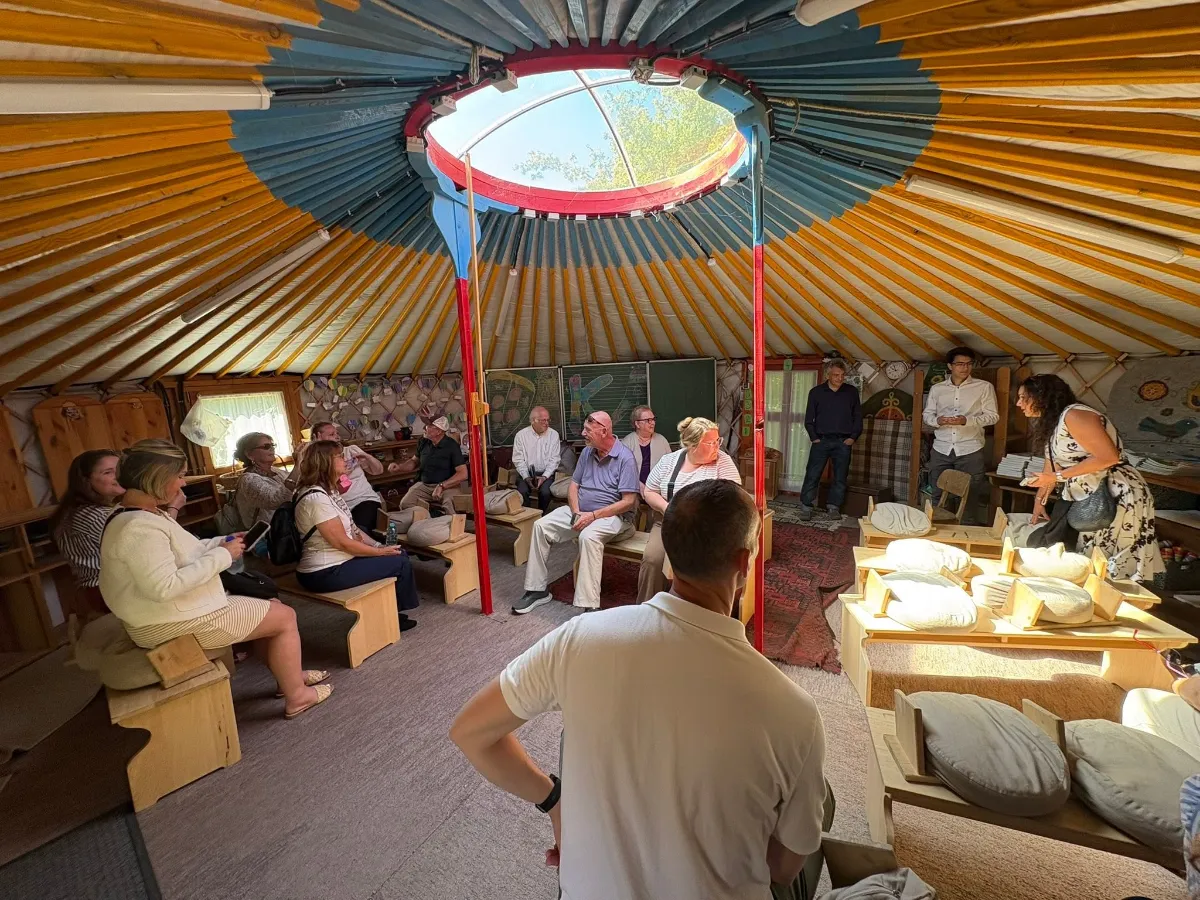
On our way to Budapest, we stopped in Kőszeg and visited the local high school. We had the opportunity to hear from the students about the town and its history, their school system, and that the students were in the middle of oral exams or field day. We received a tour of the classrooms and learned about how the original building belonged to Franciscan monks. The students were happy to speak to us about their studies, living in the dorms, and the field day taking place (including a very intense soccer game). There was an American teacher who taught English at the school and had been living abroad for ten years. She shared about trying to teach the students to play baseball, and admitting defeat when they hit the ball and ran to second base. This was our first encounter with the depth of Hungarian hospitality.
Once we arrived in Budapest, we got acquainted with our neighborhood in the theater district and exchanged to the Hungarian forint for currency. Even though it is part of the EU, Hungary’s economy is not yet stable enough to use the euro. This, coupled with the discussions about the new Prime Minister Peter Magyar, were frequent topics when learning about the current sociopolitical situation of the country. Magyar, being the name of the country in Hungarian, is an interesting name for the new Prime Minister, and may speak to the feelings of change that the country was undergoing as they navigated the decisions being made by the new government officials. There was significant hope built into this election and what it might mean for the future.
While in Budapest, in addition to taking in local sites such as Fisherman’s Bastion and Buda Castle, and cruising the Danube, we visited two more high schools and a university. These high schools displayed the same that we had experienced on our trip to Budapest - students who can speak to the history and importance of their high school studies, a tour of the building, and a greater understanding of the pathways to their future that students navigate. The University was a design school, and they were very interested in partnering with schools in the US in the future, so our business cards came in handy. Each visit included a gift presentation and many thanks to our hosts for sharing their context with us.
There are many differences between the Hungarian school systems and the United States, but also some similarities, and a review and discussion on these topics can bring about positive change and ideas for both nations. A few examples included the fact that Hungarian school systems are so heavy in theory that the students expressed a desire to push more into the workforce and better understand what the everyday work of the professionals in their fields look like. Given the focus on college and career readiness in the US and in individual state systems, this is an area where the US has ideas to share. One takeaway that I enjoyed learning was that the Hungarian students did not understand when we asked about discipline issues and supervision, because they are given extensive freedom as students. One participant asked them, “Where are your teachers when you are at lunch? Who is supervising you?” The student basically did not understand the question and said, “I’m not sure what you mean. They are also eating their lunch.” This speaks to how individual systems can perpetuate certain issues, and until you are outside that system, it can be difficult to understand how it could look different.
It is with this idea in mind - getting outside our own context so that we can better question our understanding of what is and how we do things - that the educator field studies can deliver professional learning for all educators. Experiencing the cultural perks just comes with the territory.